


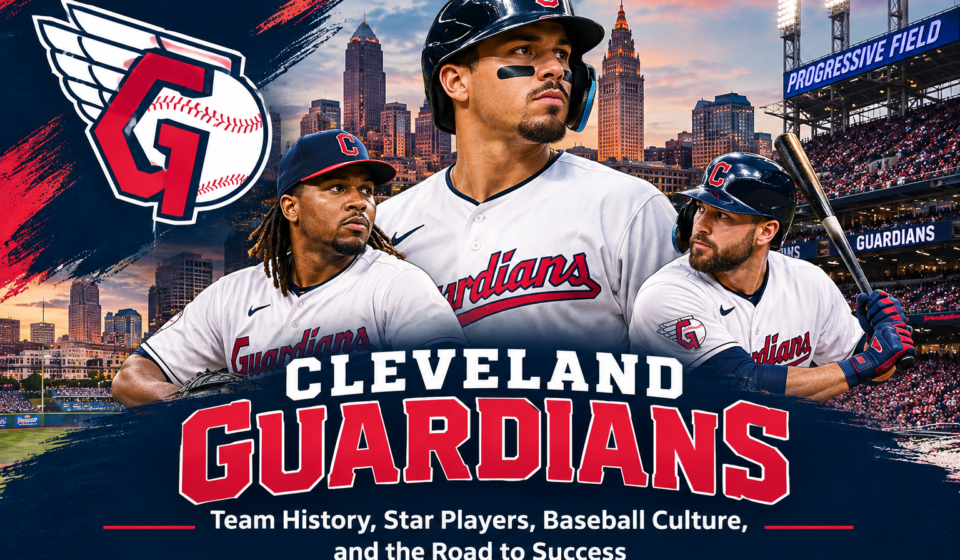

The Cleveland Guardians are one of the most recognizable teams in Major League Baseball, known for their passionate supporters, competitive spirit, talented players, and long-standing connection to the city of Cleveland. Based in Ohio, the franchise has built a reputation for developing promising baseball talent, competing in the American League, and creating memorable moments that continue to attract fans from across the United States. Whether someone follows every game or has only recently become interested in professional baseball, the story of this organization offers plenty to explore.
What makes the Cleveland Guardians particularly interesting is the combination of tradition and change that defines the franchise. The team has experienced different eras, celebrated championship achievements, endured difficult seasons, and introduced new generations of players to the sport. Its identity is closely connected to Cleveland itself, a city where sports have long played an important role in local culture. Fans appreciate not only the results on the field but also the dedication, resilience, and teamwork required to remain competitive in a demanding league.
The modern Guardians represent a fresh chapter in a baseball story that stretches back more than a century. Their name reflects a new identity, while their history remains connected to the players, managers, and supporters who helped establish the franchise. From the atmosphere at Progressive Field to the excitement of postseason baseball, the organization continues to provide compelling reasons for people to follow its journey.
Understanding the Cleveland Guardians
The Cleveland Guardians compete in Major League Baseball as a member of the American League Central Division. The franchise represents Cleveland, Ohio, and plays its home games at Progressive Field, located in the city’s downtown area. Over the years, the organization has become associated with disciplined baseball, strong pitching, intelligent player development, and an ability to compete even when its financial resources are more limited than those of some larger-market clubs.
Professional baseball requires more than a collection of talented athletes. Successful teams must develop effective strategies, identify promising prospects, manage injuries, and maintain consistency throughout a demanding season. Cleveland has frequently demonstrated the importance of these principles. Its approach has helped the franchise remain relevant in the American League while providing opportunities for young players to establish themselves at the highest level.
The team’s identity is also shaped by its supporters. Cleveland baseball fans have experienced dramatic victories, heartbreaking defeats, exciting postseason runs, and long periods of rebuilding. That shared history creates a connection between the club and the community. For many supporters, following the Guardians is not simply about checking scores. It is a tradition that brings families, friends, and generations of baseball enthusiasts together.
The Team’s Place in Major League Baseball
Major League Baseball features teams from across the United States and Canada, each with its own traditions, rivalries, and competitive challenges. The Cleveland Guardians operate within this environment while working to establish themselves as regular contenders. Their division includes opponents with different playing styles, roster strengths, and organizational philosophies, making the regular season a continuous test of preparation and adaptability.
Playing in the American League Central creates particular challenges. Division opponents understand one another’s tendencies because they meet repeatedly throughout the season. Pitchers study familiar hitters, managers adjust their strategies, and players learn how to handle the pressure of important divisional games. A strong performance against a direct rival can influence the standings and help determine whether a club reaches the postseason.
The Guardians must also compete against teams from other divisions with different resources and roster constructions. Success therefore depends on maintaining a balanced roster rather than relying entirely on one superstar or one particularly strong unit. Pitching, defense, hitting, and dependable bench contributions all play important roles in determining how far the team can advance.
Why the Franchise Attracts Baseball Fans
The appeal of Cleveland baseball comes from its combination of history, competitiveness, and accessibility. The team has often relied on identifying overlooked talent and developing players into important contributors. This approach gives supporters an opportunity to watch athletes grow from promising prospects into established major league performers.
Fans also appreciate teams that compete with determination regardless of the circumstances. Baseball is a sport in which even the strongest clubs experience losing streaks, injuries, and unexpected setbacks. The Guardians have built much of their reputation around continuing to compete through those challenges. Their ability to remain involved in division races and pursue postseason opportunities gives supporters reasons to stay invested throughout the season.
Another important part of the appeal is the connection between the team and its home city. Cleveland’s baseball culture includes generations of fans who have passed down their support to children and grandchildren. That connection creates an atmosphere in which individual games can become meaningful community experiences, especially when the team faces a major rival or enters an important stretch of the season.
The History Behind the Cleveland Guardians
The franchise’s history extends far beyond its current name. Cleveland has been represented in professional baseball for generations, and the organization has experienced several changes in identity, ownership, management, and competitive direction. Understanding this history helps explain why the Guardians name carries significance for both longtime supporters and newer fans.
The team previously competed under the Cleveland Indians name, an identity used for many decades. In the modern era, the organization reconsidered its name as part of a broader conversation about representation, tradition, and the responsibilities of professional sports franchises. The transition to the Guardians name marked an important turning point in the club’s public identity.
Although the name changed, the organization continued to build on its existing baseball operations, scouting network, player development system, and connection with Cleveland. The transition introduced a new visual identity and branding approach while preserving the team’s place in Major League Baseball. For supporters, it represented both a departure from the past and an opportunity to begin a new chapter.
The Early Years of Cleveland Baseball
Professional baseball in Cleveland developed during an era when the sport was becoming one of America’s most popular forms of entertainment. Teams attracted local audiences, newspapers followed their performances closely, and players gradually became recognizable public figures. As baseball expanded, Cleveland established itself as an important market with a loyal fan base and a strong interest in competitive professional sports.
The franchise went through different stages as leagues, team names, and organizational structures evolved. These early decades helped establish the foundations of the club’s identity. Supporters developed traditions around attending games, discussing players, and following the team’s progress through changing seasons.
Baseball in those years was different from the modern game. Travel conditions, training methods, player contracts, stadium facilities, and media coverage all operated differently. Yet the essential appeal remained familiar: fans wanted to watch skilled athletes compete, experience the uncertainty of each game, and celebrate victories with their communities.
The early history also illustrates how much the sport has changed. Modern teams use advanced analytics, video technology, specialized training programs, and sophisticated scouting methods. Earlier generations depended on different resources, but their contributions helped create the foundation on which today’s professional baseball organizations operate.
Championship Traditions and Historic Success
Cleveland’s baseball history includes important championship achievements that remain part of the franchise’s identity. The organization won the World Series in 1920 and again in 1948, giving the city memorable examples of what the team could accomplish at the highest level. These championships remain significant because they connect modern supporters with generations of players and fans who celebrated those victories.
The 1948 championship holds a particularly important place in Cleveland baseball history. The team combined strong pitching, effective hitting, and dependable defensive play to establish itself as one of the best clubs of its era. That success helped strengthen baseball’s position in the city and gave supporters a championship memory that remained influential for decades.
Historic achievements also create expectations. When fans remember championship seasons, they naturally hope that today’s roster can produce similar excitement. However, winning a championship requires many elements to come together at the right time. Talent, health, strategic decisions, player performance, and a degree of good fortune can all influence the outcome.
The Guardians continue to carry the weight of that history while competing in a much different baseball environment. Modern postseason formats, larger player pools, advanced analytics, and changing financial conditions create challenges that previous championship teams did not face in exactly the same way. Still, the ambition remains familiar: build a team capable of competing for the sport’s highest honor.
The Transition to a New Team Name
The move from the Cleveland Indians name to the Cleveland Guardians name became official in 2021, with the new identity taking effect for the 2022 season. The decision reflected the organization’s response to changing public attitudes and discussions about the use of Native American imagery and terminology in professional sports.
A franchise name is more than a label. It appears on uniforms, stadium signs, merchandise, broadcasts, and promotional materials. It can become part of a city’s identity and influence how supporters understand their connection to a team. Changing such a recognizable name therefore requires careful planning and communication.
The Guardians name draws inspiration from the Guardians of Traffic sculptures positioned on Cleveland’s Hope Memorial Bridge. These large architectural figures are familiar landmarks in the city and represent an important part of Cleveland’s visual character. By choosing the name, the organization connected its new identity to a recognizable local symbol.
The transition also required updated logos, uniforms, marketing materials, and public messaging. Fans gradually became familiar with the new branding, while the team continued its regular baseball operations. Over time, the Guardians name became the standard identity associated with Cleveland’s major league club.
Preserving Tradition While Embracing Change
One challenge for any established franchise is balancing respect for its history with the need to evolve. Cleveland faced that challenge during its name change, but the organization remained connected to its broader baseball heritage. Former players, historic achievements, and longtime supporters continued to form an important part of the team’s story.
Tradition can be preserved through many elements besides a name. Stadium experiences, memorable games, player development philosophies, community relationships, and the shared memories of supporters all contribute to a team’s identity. These elements can continue even when branding changes.
For newer fans, the Guardians name provides a clear starting point for learning about the franchise. For longtime followers, it offers an opportunity to connect different generations of Cleveland baseball. Both groups can appreciate the team’s achievements while recognizing that professional sports organizations must respond to changing social expectations.
Ultimately, a successful transition depends on what happens after the announcement. A name becomes meaningful through the performances, relationships, and experiences associated with it. As the Guardians continue competing, each season adds new memories to the franchise’s evolving history.
Progressive Field: Home of the Cleveland Guardians
Progressive Field is one of the most important places in the Cleveland Guardians story. Located in downtown Cleveland, the ballpark provides the setting for home games, special events, postseason contests, and countless experiences shared by local supporters. Since opening in 1994, the stadium has become a recognizable part of the city’s sports landscape.
The ballpark’s downtown location makes it an important part of Cleveland’s wider entertainment district. Fans can combine a baseball game with restaurants, local attractions, and other activities in the surrounding area. On game days, the neighborhood often becomes busier as supporters arrive wearing team colors and preparing to watch their club compete.
For players, the home stadium provides familiarity and routine. They practice in the same environment, learn how the field plays under different weather conditions, and become accustomed to the dimensions and sightlines. Familiar surroundings can be helpful during difficult stretches of a season, although visiting teams must deal with the same playing conditions once the game begins.
The Atmosphere on Game Day
A baseball game at Progressive Field offers an experience that extends beyond the action between the pitcher and batter. Fans arrive early, meet friends, explore the ballpark, purchase refreshments, and settle into their seats before the first pitch. As the game develops, the crowd reacts to strikeouts, extra-base hits, defensive plays, and important scoring opportunities.
The atmosphere can become particularly intense during close games. A runner reaching scoring position, a late-inning pitching change, or a crucial defensive play may cause the entire crowd to become more engaged. These moments help explain why watching a game in person can feel different from following it on television.
Postseason games can bring even greater excitement. The stakes are higher, each pitch can feel more consequential, and supporters understand that a single mistake might change the direction of a series. When the Guardians compete in October, Progressive Field can become a gathering place for fans who want to share the pressure and excitement of playoff baseball.
The stadium experience also appeals to families and casual visitors who may not follow every statistic. Watching the game, enjoying the surroundings, and participating in the crowd’s reactions can make an afternoon or evening memorable even for someone who is still learning the rules.
What Makes the Ballpark Special
Every major league ballpark has characteristics that influence how games are played and experienced. Field dimensions, weather, lighting, seating arrangements, and crowd proximity can all shape a team’s home environment. Progressive Field provides Cleveland with a familiar setting in which players can develop routines and supporters can build traditions.
The stadium’s downtown position also connects it with the city’s wider identity. Cleveland’s development, architecture, entertainment businesses, and sports culture all contribute to the experience of attending a game. For visitors, the ballpark can serve as a starting point for exploring the surrounding neighborhood.
Baseball parks also create memories that are difficult to reproduce elsewhere. A fan may remember a first game with a parent, an unexpected comeback, a spectacular catch, or a dramatic home run long after forgetting the final score. These experiences help turn a stadium into something more meaningful than a venue for sporting events.
For the Guardians, Progressive Field is both a workplace and a home base. It is where players prepare for important games, where supporters gather to celebrate success, and where new moments become part of the franchise’s history.
Weather and Playing Conditions
Cleveland’s weather can influence baseball throughout the season. Early spring games may be played in cool conditions, while summer afternoons can bring warmer temperatures and changing wind patterns. These conditions may affect player comfort, ball movement, and the way teams approach certain situations.
Pitchers must adjust their routines when the weather changes. Cold conditions can make it more difficult to remain comfortable, while wind may affect how a batted ball travels. Fielders also need to account for lighting, wind direction, and the speed of the playing surface when making difficult defensive plays.
Managers consider these factors when building lineups and deciding how to use their pitching staffs. Although weather cannot be controlled, preparation helps teams reduce its impact. The Guardians must remain adaptable because conditions can change during a long season.
For fans, checking the forecast before visiting Progressive Field is a practical part of planning. Appropriate clothing, travel arrangements, and awareness of stadium policies can make the experience more comfortable, especially during early-season games.
The Playing Style of the Cleveland Guardians
The Cleveland Guardians have frequently emphasized balanced baseball, effective pitching, defensive reliability, and intelligent decision-making. While every roster has different strengths, this general approach reflects an understanding that consistent performance across several areas can be more valuable than depending entirely on home runs or individual star power.
Baseball rewards teams that execute fundamentals under pressure. A hitter who advances a runner, a defender who turns a difficult ground ball into an out, or a reliever who escapes a bases-loaded situation can make an important contribution without producing a headline statistic. These details often determine close games.
The Guardians’ approach also reflects the realities of competing in a league where financial resources vary widely. Organizations that cannot simply purchase every established star must identify players who can improve, make smart roster decisions, and maximize the abilities of their available talent. Strong development systems become especially important in this environment.
A successful playing style must remain flexible, however. Teams need power hitters when runs are difficult to produce, dependable starters during demanding stretches, and relief pitchers who can handle different types of opponents. Cleveland’s challenge is to preserve its strengths while addressing weaknesses as the roster evolves.
The Importance of Pitching
Pitching remains one of the most influential elements of baseball success. A strong pitching staff can limit scoring opportunities, control the pace of games, and reduce the pressure on the offense. Even when hitters struggle, effective pitching may keep the team close enough to win with a late rally.
Starting pitchers establish the foundation for most games. Their ability to throw strikes, manage pitch counts, mix different offerings, and adjust to opposing hitters influences how long they can remain effective. A dependable starter can also protect the bullpen by working deep into a game and reducing the number of relievers needed.
Relief pitchers have a different responsibility. They often enter with runners on base, face dangerous hitters in high-pressure situations, or protect a narrow lead late in the contest. Their success depends on preparation, command, confidence, and the ability to make quick adjustments.
For Cleveland, maintaining pitching depth is essential throughout a long campaign. Injuries, inconsistent performances, and workload limits can quickly affect a rotation. Developing additional options gives the organization flexibility and reduces the risk of relying too heavily on a small group of players.
Starting Rotation and Consistency
A starting rotation generally includes pitchers who take turns beginning games, allowing the team to distribute workloads across the season. The quality of that rotation can determine whether a club consistently competes or struggles to keep games manageable.
Consistency does not necessarily mean that every starter must dominate every outing. Baseball is unpredictable, and even excellent pitchers experience difficult games. What matters is limiting damage, making adjustments, and giving the team a reasonable opportunity to compete.
The Guardians must also consider how opposing lineups match up against different pitchers. Some hitters perform better against left-handed pitching, while others have greater success against right-handed pitchers. Managers may adjust defensive positioning, bullpen availability, or late-game substitutions based on those matchups.
Young starters can bring excitement because of their potential, but development takes time. Learning how to navigate a lineup repeatedly, maintain command under pressure, and preserve effectiveness late in games requires experience. A strong coaching environment can help pitchers make that transition more smoothly.
The Bullpen and Late-Inning Pressure
The bullpen often determines whether a narrow lead becomes a victory. Relief pitchers must be ready to enter without much warning, sometimes with runners already threatening to score. Their ability to remain focused and execute a plan can change the outcome of a game in only a few pitches.
A dependable bullpen requires more than one dominant closer. Managers need pitchers who can handle different innings, face both left-handed and right-handed hitters, and work effectively in a variety of situations. Depth matters because relievers cannot maintain peak performance indefinitely without rest.
Cleveland must balance immediate needs with long-term workload management. Using the same relief pitchers too frequently may create fatigue and increase the risk of diminished performance. Managers therefore monitor recent appearances, pitch counts, and the importance of upcoming games when deciding how to distribute work.
Bullpen success is also closely connected to starting pitching. When starters regularly complete enough innings, relievers can work in more favorable circumstances. When starters leave early, the bullpen may be forced to cover several innings, making future games more difficult to manage.
Defense as a Competitive Advantage
Defense is sometimes overlooked because spectacular home runs receive more attention, but reliable fielding remains essential to winning baseball. Every ground ball, fly ball, throw, and double-play opportunity creates a chance to prevent runs.
A defensive mistake can extend an inning, increase a pitcher’s workload, or allow an opponent to score without producing a hit. Conversely, a well-executed play can end a rally and shift momentum toward the defending team. Over a long season, these small differences accumulate.
The Guardians benefit when their infielders communicate clearly, outfielders position themselves effectively, and catchers coordinate with pitchers. Defensive positioning can be informed by scouting reports, while athletic ability and sound fundamentals help players respond when a ball is hit somewhere unexpected.
Strong defense also supports the pitching staff psychologically. Pitchers can attack the strike zone more confidently when they trust the players behind them. That relationship helps the entire team operate more efficiently, especially during games in which offensive production is limited.
Creating Offense Without Relying Only on Home Runs
Home runs can change a game instantly, but not every lineup contains several players capable of hitting them regularly. Teams therefore need additional ways to create scoring opportunities. Consistent contact, disciplined at-bats, smart baserunning, and productive approaches with runners in scoring position can all help an offense produce runs.
A patient hitter can force a pitcher to throw more pitches and potentially make a mistake. A well-placed single can move a runner into scoring position, while a productive ground ball may allow a teammate to advance. These actions may not look dramatic individually, but they can contribute to a successful inning.
The Guardians must find a balance between patience and aggression. Taking pitches can be useful when a pitcher struggles with control, but hitters also need to attack strikes when the opportunity appears. An overly passive approach can allow opponents to get ahead in counts, while uncontrolled aggression may lead to unnecessary outs.
A versatile offense also adapts to the opponent. Some pitchers can overpower hitters with velocity, while others rely on movement, location, and changing speeds. Recognizing these differences allows hitters to prepare more effectively and avoid repeating the same mistakes throughout a series.
Stay in touch to get more updates & news on Magazine Dispatch!