



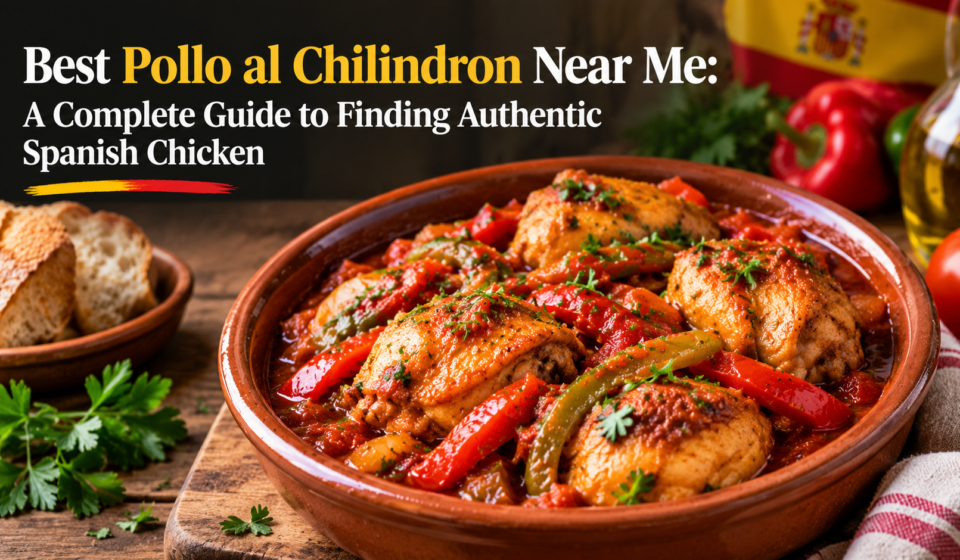

The best pollo al chilindron near me, you are looking for more than an ordinary chicken meal. You want tender chicken, a rich pepper and tomato sauce, fresh ingredients, and the comforting flavors of traditional Spanish cooking. Pollo al chilindrón is a classic Spanish dish known for its rustic preparation, colorful vegetables, and satisfying taste. Although it may not appear on every restaurant menu, finding a kitchen that prepares it with care can turn an ordinary meal into a memorable dining experience.
The dish is particularly associated with Aragón in northeastern Spain. Its traditional character comes from slowly cooked chicken combined with peppers, tomatoes, onions, garlic, and olive oil. Some recipes include Spanish cured ham, paprika, and white wine to create additional depth. The result is a savory meal with gentle sweetness from the vegetables and a sauce that pairs beautifully with bread, rice, or potatoes.
Finding the best pollo al chilindron near me requires a little more attention than searching for a common chicken dish. Restaurants use different menu descriptions, recipes vary between kitchens, and some establishments offer regional specialties only on selected days. By understanding the ingredients, checking menus carefully, and reading useful customer reviews, you can make a more confident dining choice.
Whether you are planning a relaxed lunch, a family dinner, or a special evening out, this guide explains what makes pollo al chilindrón special and how to find a restaurant that prepares it well. You will also learn how to compare different versions, choose suitable side dishes, and recognize the qualities that separate an excellent plate from a disappointing one.
What Is Pollo al Chilindron?
Pollo al chilindrón is a traditional Spanish chicken preparation in which chicken is cooked with peppers, tomatoes, onions, garlic, and olive oil until the ingredients form a deeply flavored sauce. The dish is associated with northern Spanish home cooking, particularly the Aragón region, where straightforward ingredients and patient preparation are central to many traditional meals.
Unlike heavily battered chicken, creamy chicken casseroles, or fast grilled poultry, this dish depends on the natural flavors released during cooking. The vegetables soften, the tomatoes become concentrated, and the chicken absorbs the seasoning as everything simmers together. The finished sauce should complement the meat rather than overpower it.
Traditional recipes are not completely identical. Some cooks use red and green peppers, while others emphasize red peppers for their sweetness. Spanish cured ham may contribute a savory, salty character, and a little white wine can add brightness. These variations are part of the dish’s culinary appeal rather than evidence that every recipe must follow a single rigid formula.
When looking for the best pollo al chilindron near me, understanding the dish helps you identify restaurants that appreciate its traditional character. A promising menu description will usually mention chicken, peppers, tomatoes, garlic, and slow cooking or braising. Those details offer a stronger starting point than a food photograph alone.
Why People Search for the Best Pollo al Chilindron Near Me
People often search for a particular dish because they already know what they want to eat. They might have tried it during a holiday, discovered it at a Spanish restaurant, or learned about it through a cooking program. Instead of browsing every restaurant in town, they want a convenient way to find a nearby kitchen that serves the dish.
The phrase also reflects a desire for quality. Someone searching for the best pollo al chilindron near me is not necessarily interested in the first available chicken entrée. They may want traditional preparation, generous portions, fresh vegetables, balanced seasoning, and an atmosphere suitable for enjoying a relaxed meal.
Local food searches can be challenging when the dish is relatively uncommon. A restaurant may specialize in Spanish cuisine without offering every regional recipe. Another establishment may prepare pollo al chilindrón as a seasonal special, meaning its availability changes. Some menus may use an English description instead of the original Spanish name.
A useful search strategy combines menu research with direct confirmation. Checking a restaurant’s current menu, reading recent reviews, and contacting the staff can prevent an unnecessary journey. It also gives you an opportunity to ask about ingredients, preparation methods, portion sizes, and takeaway options before making your decision.
How to Search for the Best Pollo al Chilindron Near Me
The easiest way to begin is with a local map or search engine. Enter the full Spanish name, then try alternative spellings and related descriptions. Some websites omit accent marks, while others translate the dish into English. Searching several ways increases the likelihood of finding relevant restaurant menus.
Useful search phrases include pollo al chilindrón, pollo al chilindron, chicken chilindron, Spanish chicken stew, traditional Spanish chicken, and Spanish restaurants near me. You can also include your neighborhood or city to narrow the results. If you are searching while traveling, adding the destination’s name can help distinguish nearby options from restaurants in another region.
After finding possible restaurants, visit their official menu pages when available. A restaurant directory may display an outdated menu or an incomplete selection. Current information from the establishment is generally more useful, particularly when you are looking for a specific dish rather than a general cuisine category.
Customer reviews can help you decide which restaurants deserve further attention. Look for comments describing tender chicken, rich sauce, fresh vegetables, and thoughtful seasoning. Reviews about the exact dish are more useful than general statements about the restaurant’s popularity.
The best pollo al chilindron near me should be identified through a combination of availability, food quality, convenience, and value. A highly rated restaurant is not automatically the right choice if it does not serve the dish. Confirming the menu before visiting remains one of the most practical steps.
Start With Spanish Restaurants and Regional Kitchens
Spanish restaurants are a sensible starting point because their menus are more likely to feature traditional chicken dishes and regional preparations. However, Spanish cuisine is broad, and many restaurants concentrate on tapas, seafood, paella, or grilled specialties. It is important to check the actual menu rather than assuming the dish will be available.
Restaurants with an interest in regional Spanish cooking may be especially worth investigating. Kitchens that celebrate traditional stews, cured meats, seasonal vegetables, and slow-cooked dishes often have the techniques needed to prepare pollo al chilindrón successfully. Even so, the restaurant’s stated specialties should guide your expectations.
Tapas bars can also be useful places to explore. Although many focus on small plates, some offer substantial mains or rotating specials. A chef may prepare a regional chicken stew for a limited period, particularly when the restaurant changes its menu according to season or customer demand.
If a restaurant does not list the dish, a brief phone call can clarify whether it is available. Ask whether the kitchen prepares pollo al chilindrón regularly, offers it by advance request, or has a comparable traditional chicken stew. This approach helps you discover genuine possibilities without relying on assumptions.
Understanding the Ingredients of Traditional Pollo al Chilindron
The quality of pollo al chilindrón begins with its ingredients. Chicken provides the main substance, while peppers, tomatoes, onions, garlic, and olive oil create the characteristic sauce. Because the ingredient list is relatively straightforward, each component contributes noticeably to the finished flavor.
Peppers bring sweetness and a soft vegetable texture. Tomatoes provide acidity and color, preventing the sauce from tasting excessively rich. Onion develops sweetness as it cooks, while garlic adds a savory aroma. Olive oil carries these flavors and helps create a cohesive sauce that coats the chicken.
Some traditional recipes include jamón serrano, a Spanish cured ham that adds saltiness and a deeper savory character. White wine may be used to lift the flavor, while paprika can contribute color and gentle warmth. The precise combination depends on the cook and regional tradition.
When comparing restaurants, do not expect every kitchen to use identical ingredients. Instead, look for a preparation that respects the central pepper-and-tomato character. A thoughtfully prepared variation can still be delicious, provided its flavors remain balanced and the chicken is cooked properly.
Why Slow Cooking Makes Such a Difference
Slow cooking gives the chicken time to become tender while the vegetables develop a deeper flavor. When chicken is browned before simmering, the surface gains color and savory notes that enrich the sauce. The browned pieces can then finish cooking gently alongside the vegetables.
The peppers and onions also benefit from patience. Cooking them gradually allows their natural sweetness to emerge without burning. Tomatoes lose some of their raw sharpness as the sauce reduces, while garlic blends into the mixture instead of remaining harsh or overpowering.
A rushed preparation may have the right ingredients but still taste disappointing. The sauce could remain watery, the vegetables might be too firm, or the seasoning may not have enough time to blend. These problems are not inevitable, but they demonstrate why technique matters as much as the ingredient list.
When searching for the best pollo al chilindron near me, look for menus that describe the dish as braised, stewed, or slowly cooked. Those terms can indicate an approach suited to the recipe, although the final taste and texture remain the most important measures of quality.
What Makes the Chicken Tender and Flavorful?
Tender chicken is one of the clearest signs of a well-prepared stew. Bone-in thighs and drumsticks are popular choices because their texture often holds up well during simmering. They also contribute savory juices that mingle with the vegetables and enrich the sauce.
Boneless chicken can work too, especially when a restaurant adapts the recipe for easier dining. The important factor is appropriate cooking rather than a particular cut alone. Lean pieces can become dry if they are cooked for too long, while larger pieces need enough time to cook safely and evenly.
The chicken should be moist and easy to eat without feeling undercooked or falling apart into an unpleasant mush. Its flavor should work with the sauce, not disappear beneath excessive seasoning. When served, the meat and vegetables should taste like parts of one carefully prepared dish.
Customer reviews may mention juicy meat or tender chicken, but personal descriptions can differ. Look for several consistent comments rather than treating a single review as definitive evidence. If you visit, pay attention to the actual texture and temperature of the food before deciding whether the restaurant deserves another visit.
How to Recognize a Well-Made Chilindron Sauce
The sauce is central to the identity of pollo al chilindrón. A successful version combines the sweetness of cooked peppers with the acidity of tomatoes and the savory depth of onions, garlic, and chicken juices. The result should taste rounded rather than sharply acidic, overly salty, or bland.
Texture is important as well. A good sauce generally has enough body to cling to the chicken, but it does not need to be perfectly smooth. Some kitchens leave small pieces of pepper and tomato visible, while others cook the vegetables until they blend into a thicker consistency.
Color can provide a clue, although appearance alone cannot prove quality. Many versions have a rich red or orange-red appearance because of the tomatoes and peppers. A pale sauce might indicate a different preparation, but lighting, ingredients, and recipe variations can affect the final color.
When dining out, taste the sauce with a little chicken and, if appropriate, a small piece of bread. This combination reveals whether the flavors work together. The best pollo al chilindron near me should deliver a satisfying balance in every bite rather than relying on an attractive presentation to create a good first impression.
The Role of Fresh Peppers and Tomatoes
Peppers provide much of the distinctive character associated with chilindrón. Their natural sweetness becomes more noticeable as they soften, especially when they are cooked slowly with onions and olive oil. Red peppers are particularly useful for their rich color and mellow flavor, although green peppers can provide contrast.
Tomatoes bring brightness and help turn the cooked vegetables into a cohesive sauce. Their acidity balances the sweetness of the peppers and the richness of the chicken. Good preparation allows the tomato flavor to develop without dominating the other ingredients.
Fresh produce can make a difference, but a restaurant may also use suitable canned tomatoes or preserved peppers, depending on the recipe and season. Ingredient quality involves more than whether something is fresh. The product must be flavorful, handled properly, and used in a way that suits the dish.
When checking menu descriptions, look for references to peppers, tomatoes, and traditional Spanish seasoning. These ingredients do not guarantee an excellent meal by themselves, but they help establish whether the restaurant understands the defining flavor profile of pollo al chilindrón.
How to Read Restaurant Reviews Effectively
Restaurant reviews are most useful when they contain specific information. A comment saying that the food was excellent tells you relatively little about a particular dish. A review describing tender chicken, a balanced pepper sauce, generous portions, and friendly service provides more practical detail.
Recent reviews deserve attention because restaurant quality can change. A new chef, revised menu, or change in ownership may affect the dining experience. Older comments can still offer background, but they should not be the only reason you choose a restaurant.
Look for patterns across several independent reviews. If different diners consistently praise the sauce and tenderness, that is more meaningful than a single enthusiastic comment. If several recent reviews mention cold food or inconsistent service, consider those concerns before making a reservation or ordering takeaway.
Photographs can complement written feedback, particularly when customers show the actual dish rather than only the restaurant interior. Still, images cannot tell you everything about flavor, temperature, or freshness. Use reviews and photographs as decision-making tools, then confirm the dish’s availability directly.
Questions to Ask Before Visiting a Restaurant
A short conversation with restaurant staff can answer questions that an online menu leaves unresolved. Start by asking whether pollo al chilindrón is currently available. If the answer is yes, you can ask whether it is a regular menu item or a special that requires advance ordering.
You might also ask about the main ingredients. This is particularly useful if you avoid pork, have a food allergy, or follow a dietary preference. Traditional versions may contain Spanish cured ham, and the staff should be able to explain whether the recipe includes it or whether an alternative preparation is possible.
Portion size is another reasonable question. Some restaurants serve the chicken as an individual main course, while others prepare larger portions intended for sharing. Knowing this in advance can help you order appropriately and avoid unnecessary food waste.
If you plan to take the dish home, ask whether the restaurant offers takeaway and how the meal is packaged. Because pollo al chilindrón contains sauce, suitable packaging can help preserve its texture and reduce spills during transport.
Choosing Between Dine-In and Takeaway
Dining in allows you to enjoy the dish shortly after it leaves the kitchen. The chicken arrives warm, the sauce retains its intended texture, and you can pair the meal with freshly prepared sides. A comfortable atmosphere can also make the experience more enjoyable, particularly when sharing a meal with friends or family.
Takeaway offers convenience for busy evenings or relaxed meals at home. Pollo al chilindrón can be suitable for takeaway because it is a saucy, braised dish rather than a crispy preparation that depends on a delicate coating. However, packaging and transport time still affect the final result.
When ordering takeaway, ask whether the chicken and sauce are packed together or separately. Either approach can work, but the food should be stored and transported safely. Follow the restaurant’s guidance for prompt refrigeration if you are not eating immediately.
Your choice should reflect the occasion. Dine-in is attractive when atmosphere and immediate service matter, while takeaway is useful when convenience is the priority. In either case, checking current availability helps ensure that you can enjoy the dish when you want it.
The Best Side Dishes for Pollo al Chilindron
The right side dish complements the rich sauce without competing with it. Crusty bread is a natural choice because it allows diners to enjoy the remaining pepper-and-tomato mixture. A simple loaf with a firm crust and soft interior can turn the sauce into one of the most satisfying parts of the meal.
Rice is another practical option. Its mild flavor absorbs the sauce while allowing the chicken to remain the main attraction. Plain rice works especially well when the chilindrón preparation is richly seasoned, because it provides a neutral contrast without adding unnecessary complexity.
Potatoes also pair beautifully with the dish. Roasted potatoes add a lightly crisp exterior, while boiled or mashed potatoes offer a softer texture. A restaurant may serve the chicken with potatoes directly on the plate or offer them separately.
Simple vegetables or a fresh salad can balance the meal. Their crispness and freshness contrast with the warm, tender chicken. When choosing sides, consider the sauce’s richness, the portion size, and your own appetite rather than ordering several heavy accompaniments automatically.
Why Crusty Bread Is a Classic Choice
Bread is especially useful when a dish contains a flavorful sauce. Its texture provides a pleasant contrast with the tender chicken and soft vegetables, while its mild taste allows the sauce to remain prominent. A small serving may be all you need to complete the meal.
Fresh bread is generally more enjoyable than a dry or overly soft loaf. A crisp crust and a tender center offer enough structure to collect the sauce without falling apart immediately. Some restaurants provide bread automatically, while others include it as a separate order.
If you are eating at a Spanish restaurant, ask which bread is served with the chicken. You do not need an elaborate specialty loaf to enjoy the dish. The main objective is to complement the sauce rather than introduce a competing flavor.
Bread can also make a modest portion feel more complete, although it should not replace a suitable serving of chicken and vegetables. Choose the amount that fits your appetite and dietary needs.
Pairing Pollo al Chilindron With Rice and Potatoes
Rice provides a simple foundation for the sauce. Its neutral flavor absorbs the tomato and pepper mixture, making each spoonful cohesive. If you prefer a less heavy meal, a moderate portion of rice with chicken and vegetables may be sufficient.
Potatoes offer a different experience. Their natural starchiness works well with savory sauces, while roasted versions introduce a crisp texture that contrasts with the soft chicken. Boiled potatoes keep the meal gentler and allow the seasoning of the stew to remain the focus.
Restaurants may prepare rice or potatoes according to their own menu style. A Spanish kitchen might offer a traditional side, while a modern restaurant may provide a more contemporary accompaniment. Neither choice is automatically better; the combination should taste balanced.
When choosing the best pollo al chilindron near me, consider whether the restaurant provides sides that suit the dish. Good accompaniments demonstrate attention to the overall meal and can make the dining experience more satisfying.
Is Pollo al Chilindron Spicy?
Traditional pollo al chilindrón is not necessarily hot or spicy. Its flavor usually comes from sweet peppers, tomatoes, garlic, onion, olive oil, and sometimes paprika. Depending on the cook, paprika may add gentle warmth or a smoky note without making the dish fiery.
Restaurants sometimes adapt regional dishes to local tastes. One kitchen might emphasize sweet peppers, while another may use stronger paprika or additional seasoning. If you prefer mild food, ask the staff how the sauce is prepared before ordering.
If you enjoy heat, you can ask whether the kitchen offers a spicier variation. However, adding hot peppers is an adaptation rather than an essential feature of the traditional dish. It is worth distinguishing between a recipe’s defining flavors and personal modifications.
This flexibility makes pollo al chilindrón appealing to many diners. The dish can be rich and flavorful without depending on strong chili heat, making it a useful option for people who enjoy savory food but prefer a gentler level of spice.
Can Pollo al Chilindron Be a Family-Friendly Meal?
Pollo al chilindrón can work well for family dining because it combines familiar chicken with vegetables and a flavorful sauce. It does not usually depend on an extremely spicy seasoning, although individual recipes vary. Families can often pair it with plain rice, potatoes, or bread to suit different preferences.
The dish may be served with bone-in chicken, so diners should consider whether that format is suitable for younger children. Some restaurants may offer boneless adaptations, but availability should be confirmed rather than assumed.
Sharing the meal can also be a practical option. A larger serving of chicken with sides may suit a family that enjoys tasting different dishes together. Before ordering, ask about portion sizes and whether the restaurant permits the dish to be shared between diners.
For family occasions, the overall restaurant environment matters as much as the recipe. Comfortable seating, clear menu information, helpful service, and suitable food choices all contribute to an enjoyable visit.
What to Consider When Dining With Dietary Restrictions
Traditional recipes may contain ingredients that are not obvious from the dish’s name. Spanish cured ham is a common example. If you avoid pork for religious, personal, or dietary reasons, ask whether the recipe includes jamón serrano or another pork product.
You should also ask about the cooking fat and any prepared stock or seasoning mixture. Restaurants may use ingredients that differ from those described on a short menu listing. Clear questions help you make an informed choice without relying on assumptions about a dish’s name or origin.
People with food allergies should communicate them directly to the restaurant. A menu description is not a complete ingredient list, and cross-contact can occur in a shared kitchen. Staff should explain what they can safely accommodate, but avoid ordering if the restaurant cannot provide sufficient information about a serious allergy.
Dietary preferences may be easier to manage when you contact the restaurant before arriving. This gives the kitchen time to explain its preparation and, when possible, discuss an appropriate alternative. Never assume that a traditional recipe is automatically suitable for every diet.
How Much Does Pollo al Chilindron Cost?
The price of pollo al chilindrón depends on the restaurant, location, portion size, ingredients, and service style. A casual neighborhood restaurant may charge differently from a premium Spanish dining room. Additional sides, drinks, taxes, and service charges can also affect the final bill.
Rather than choosing exclusively by price, compare what is included. One restaurant may provide a generous portion with vegetables and a side, while another may list the chicken as a main dish and charge separately for accompaniments. These differences make headline prices difficult to compare fairly.
Check current menu prices before visiting, particularly if you are planning a group meal. Online menus can be outdated, and special dishes may have different pricing from regular items. A quick confirmation helps avoid surprises.
Value comes from the complete experience: food quality, portion size, preparation, service, and convenience. The cheapest meal is not always the most satisfying, while a higher price does not automatically guarantee a better recipe.
How to Judge Portion Size and Value
A satisfying portion should provide enough chicken and sauce for the meal without requiring excessive extras. The ideal amount depends on appetite, whether you are sharing, and what else you plan to order. Some diners prefer a substantial main course, while others enjoy several smaller plates.
Look at menu photographs and recent customer comments for clues about serving size. If the information remains unclear, ask the staff whether the dish is intended for one person or for sharing. This is particularly helpful when ordering for a family or group.
The balance between chicken and vegetables also matters. A plate containing plenty of sauce but very little chicken may feel disappointing, even if the sauce tastes excellent. Conversely, generous meat portions can still be unsatisfying if the vegetables are undercooked or the seasoning is weak.
Good value means that the ingredients, cooking, and portion work together. When evaluating the best pollo al chilindron near me, consider the meal as a whole instead of focusing on price alone.
What Restaurant Atmosphere Should You Look For?
A restaurant’s atmosphere influences how you experience a meal, but the ideal setting depends on your plans. A casual dining room may be perfect for a relaxed lunch, while a quieter restaurant may suit a special dinner. Neither style guarantees better food, so atmosphere should complement rather than replace menu research.
Clean tables, comfortable seating, attentive staff, and a well-organized dining area are useful signs of professional service. You should feel comfortable asking about the dish, its ingredients, and preparation. Staff who answer clearly can make the decision easier.
For a special occasion, consider noise levels, seating arrangements, and the time required for service. A slow-cooked dish may need careful preparation, so it is sensible to allow enough time to enjoy the meal rather than rushing through it.
If you plan to dine with children, older relatives, or a larger group, check whether the restaurant can accommodate everyone comfortably. A welcoming environment makes a good meal even better.
What to Expect From Restaurant Service
Good service begins with accurate information. Staff should be able to tell you whether pollo al chilindrón is available, describe its main ingredients, and explain any relevant substitutions. If it is a special, they should clarify whether it may run out before the end of service.
The meal should arrive at an appropriate temperature and be presented in a way that makes it easy to enjoy. Chicken should be cooked through, the sauce should be warm, and the side dishes should complement the main course. A simple dish can still demonstrate care through proper timing and attention.
If something is not right, politely explain the issue to the server. The chicken may have cooled during service, or the order may differ from the menu description. Giving staff an opportunity to address a reasonable concern is often more productive than immediately dismissing the restaurant.
A positive experience combines flavorful food with clear communication and thoughtful service. When several restaurants appear promising, these practical details can help you decide which one deserves another visit.
Why Menu Accuracy Matters
Online menus are useful, but they are not always updated immediately when a restaurant changes its offerings. A dish may have been available during a previous season and then removed, or a special may appear in an old customer photograph without being listed today.
This is particularly relevant when searching for a less common regional preparation. Restaurants may change their menus frequently, and search engines sometimes continue displaying older descriptions. A restaurant appearing in search results does not prove that it currently serves pollo al chilindrón.
Use the official menu as your first reference, then contact the establishment if the dish is missing or its availability is unclear. Confirming the information before traveling saves time and helps prevent disappointment.
Accurate menu information also supports better dietary decisions. Ingredients, serving sizes, and preparation methods may change, so ask about anything important to your meal rather than relying on a description published months earlier.
Seasonal Specials and Limited Menu Availability
Some restaurants prepare traditional dishes as rotating specials rather than permanent menu items. This approach allows chefs to introduce regional recipes without making them available every day. It can also reflect seasonal ingredients, customer demand, or the time required to prepare a slow-cooked meal.
A seasonal special can be worth exploring, but it requires a little planning. Contact the restaurant to ask when the dish is served and whether advance ordering is possible. If you are traveling a long distance, request confirmation before setting off.
Specials may also vary from one visit to another. A chef might use a slightly different pepper mixture or adjust the side dishes according to the season. These variations can provide an opportunity to experience the recipe in a new way.
If the restaurant offers pollo al chilindrón only occasionally, consider asking whether it can notify you when it returns. This is a straightforward way to plan a future meal without assuming the dish will always be available.
Can You Order Pollo al Chilindron for Delivery?
Delivery can be convenient when you want a traditional chicken meal without dining out. Because pollo al chilindrón is served with sauce, it generally travels more successfully than dishes that depend on a crisp coating. However, the final quality depends on packaging, distance, and delivery time.
Choose a restaurant that uses secure, food-safe containers and provides a clear delivery estimate. The sauce should remain contained, and the chicken should arrive warm enough to enjoy after a reasonable journey. Long transport times may affect texture and temperature.
Before placing an order, verify that the dish is actually available for delivery. A restaurant may offer it in the dining room but exclude it from takeaway because of preparation limits or menu changes. Delivery platforms may also display incomplete selections.
If the food arrives lukewarm or has been held too long, follow appropriate food-safety guidance rather than leaving it at room temperature. When reheating leftovers, heat them thoroughly and store them promptly if you do not plan to eat them immediately.
Tips for Keeping Takeaway Chicken Enjoyable
The quality of takeaway food begins with proper handling. Bring the meal home promptly and avoid leaving it in a warm vehicle or on a counter for an extended period. If you will not eat it soon, refrigerate it according to food-safety recommendations.
When reheating, use a suitable covered pan or microwave-safe container. Gentle heating can help warm the chicken and sauce without drying the meat excessively. Stir the sauce where appropriate so the heat is distributed more evenly, and ensure the food reaches a safe temperature throughout.
Avoid reheating the same portion repeatedly. It is better to warm the amount you expect to eat and store the remaining food safely. Follow the restaurant’s instructions when available, especially if the dish arrives in packaging that is not designed for reheating.
Good takeaway handling preserves both convenience and enjoyment. A carefully prepared chicken stew can remain satisfying at home when it is transported, stored, and reheated properly.
Pollo al Chilindron Compared With Other Chicken Dishes
Pollo al chilindrón shares some characteristics with other European chicken stews, but its pepper-and-tomato base gives it a recognizable identity. Chicken cacciatore, for example, is an Italian preparation that may include tomatoes, herbs, wine, mushrooms, or other vegetables. The precise recipe varies, and its flavor profile often differs from the Spanish dish.
Basque-style chicken and other regional Spanish preparations can also include peppers and tomatoes. This overlap is unsurprising because neighboring culinary traditions often share ingredients and techniques. The difference usually lies in the seasoning, proportions, and method used by a particular kitchen.
Creamy chicken dishes offer a contrasting experience. They depend on dairy-based sauces, while traditional chilindrón relies primarily on vegetables and olive oil. That makes the latter appealing to diners who prefer a savory tomato-and-pepper sauce instead of a creamy preparation.
Understanding these differences helps you order with confidence. If you specifically want the best pollo al chilindron near me, check that the restaurant serves the pepper-and-tomato preparation rather than a loosely similar chicken entrée.
Why Traditional Spanish Food Appeals to Modern Diners
Traditional Spanish cooking often turns everyday ingredients into satisfying meals through careful preparation. Chicken, vegetables, olive oil, and seasoning are accessible components, but the way they are combined creates depth. The result can feel both familiar and distinctive.
Many diners appreciate food that emphasizes flavor rather than unnecessary complexity. A well-made stew offers tenderness, warmth, and a balanced sauce without requiring elaborate presentation. It is the kind of meal that can be enjoyed slowly and shared comfortably.
Regional dishes also provide a connection to culinary history. Learning about the ingredients and preparation of pollo al chilindrón adds context to the dining experience. Instead of ordering an unfamiliar item without knowing what to expect, you can appreciate why the recipe has remained part of Spanish food culture.
Modern restaurants may adapt traditional dishes to suit different ingredients or customer preferences. Thoughtful adaptations can introduce the recipe to new audiences while retaining its defining character. The most successful versions respect the original flavor balance even when the presentation changes.
How to Make Pollo al Chilindron at Home
If you cannot find a restaurant serving the dish nearby, preparing pollo al chilindrón at home is another option. The basic method involves browning chicken, cooking onions and peppers until soft, adding tomatoes and seasoning, and allowing everything to simmer until the chicken becomes tender.
Start with suitable chicken pieces and a heavy pan or pot. Brown the meat in olive oil, working in batches if necessary so the pieces develop color instead of steaming. Set the chicken aside while you prepare the vegetables in the same cooking vessel.
Cook the onions and peppers gently until softened, then add garlic and tomatoes. Some recipes include a little white wine and Spanish cured ham, while others keep the ingredient list simpler. Return the chicken to the pan and simmer until it is cooked through and the sauce has developed a rich flavor.
The key is patience. Avoid rushing the vegetables or allowing the sauce to burn. Taste the mixture near the end of cooking and adjust the seasoning carefully. Serve with bread, rice, or potatoes for a comforting meal inspired by northern Spanish cooking.
Choosing the Right Ingredients for Homemade Chilindron
Good ingredients make the home-cooking process easier. Select chicken pieces of similar size so they cook at a comparable rate. Bone-in thighs and drumsticks are useful options because they tend to remain moist during braising, although other cuts can work with appropriate timing.
Choose peppers that feel firm and have a fresh appearance. Ripe tomatoes or a good-quality canned tomato product can provide the sauce base. Fresh onions and garlic contribute aroma, while olive oil helps the ingredients cook evenly and carries their flavors through the dish.
If you choose to include Spanish cured ham, remember that it contributes salt as well as savory flavor. Taste before adding extra salt, especially if the stock or other seasonings are already salty. A small amount can make a noticeable difference without overwhelming the chicken.
Use seasonings with restraint. Paprika can contribute color and warmth, but too much may obscure the natural sweetness of the vegetables. The objective is a balanced sauce in which the chicken, peppers, tomatoes, and aromatics remain recognizable.
Common Mistakes That Can Affect the Dish
One common mistake is rushing the vegetables. Peppers and onions need enough time to soften and release their sweetness. If they are added to the pan and cooked briefly over high heat, the sauce may taste raw or harsh rather than rounded.
Another problem is adding too much liquid. Some liquid is needed for braising, but excessive water can leave the sauce thin and dilute the flavor. If the mixture becomes too loose, a gentle uncovered simmer may help it reduce, provided the chicken does not overcook.
Overcooking the meat can also affect the result. Although braising is designed to tenderize chicken, cooking time still matters. Smaller or boneless pieces may finish earlier than larger bone-in portions, so check the food rather than relying only on a fixed time.
Finally, seasoning should be balanced. Too much salt, paprika, or garlic can overpower the vegetables. Taste the sauce as it develops and make small adjustments. Careful attention to these details can improve a home version and help you recognize similar qualities when dining out.
How to Store and Reheat Homemade Pollo al Chilindron
Leftover chicken stew should be handled safely. Place it in clean, shallow containers and refrigerate it promptly rather than leaving it at room temperature for a prolonged period. Smaller portions cool more efficiently and make reheating easier.
Keep the chicken with enough sauce to help maintain moisture. When reheating, warm the food thoroughly and stir where appropriate so the heat reaches the entire portion. If the sauce has thickened during refrigeration, a small amount of suitable liquid may help restore its consistency.
Avoid assuming that a pleasant smell alone proves food is safe. Follow established storage times and temperature guidance, and discard leftovers that have been stored improperly or for too long. Food safety is more important than trying to preserve every portion.
If you prepare the dish in advance, plan how it will be cooled, stored, and reheated. Good preparation makes it easier to serve a flavorful meal without compromising safety.
Making Pollo al Chilindron Suitable for Different Preferences
The basic preparation can be adjusted to suit different tastes while preserving its main character. Someone who prefers a milder flavor can emphasize sweet peppers and tomatoes, while a diner who enjoys a deeper savory profile may appreciate a traditional version containing cured ham.
A pork-free adaptation may omit the ham, but the kitchen should explain how it develops flavor in its place. Additional aromatics, carefully cooked vegetables, or an appropriate stock can help build depth. The result will differ from some traditional versions, but it can still be enjoyable.
For a lighter meal, consider serving a moderate portion with vegetables or a simple salad. Rice and potatoes remain useful options for diners who want a more substantial plate. The best combination depends on appetite, dietary requirements, and the richness of the sauce.
When eating out, do not assume every requested modification is possible. Ask the restaurant whether it can safely accommodate your needs. Clear communication helps the kitchen provide a meal that is both enjoyable and appropriate for you.
Planning a Meal Around Pollo al Chilindron
A successful dining plan begins with confirming availability. Check the menu, contact the restaurant if necessary, and ask whether you need to order in advance. If the dish is a special, find out when it is served so you can plan your visit accordingly.
Think about the rest of the meal before arriving. A light starter, the chicken with a suitable side, and a simple dessert may be enough for a satisfying dinner. If you are dining with others, check whether they have different dietary requirements or prefer sharing several dishes.
Allow enough time to enjoy the food. A slow-cooked chicken dish is particularly suited to a relaxed meal rather than a rushed stop. If you have a tight schedule, ask the restaurant about typical service times before choosing to dine in.
Planning also helps with budgeting. Review the menu prices and any additional charges, and consider transportation or delivery costs where relevant. These small steps can make the experience smoother from the moment you begin searching to the final bite.
Finding Authentic Spanish Flavors Outside Spain
Outside Spain, the availability of regional dishes depends heavily on the local restaurant scene. Cities with established Spanish communities or a variety of regional European restaurants may offer more opportunities to discover traditional preparations. In smaller markets, the dish may be less common or appear only as a special.
A restaurant does not have to be located in Spain to prepare an enjoyable version. What matters is its understanding of the ingredients, the care taken during cooking, and the balance of the finished dish. Menu descriptions, staff knowledge, and relevant customer feedback can help you identify promising kitchens.
It is also important to keep expectations realistic. A restaurant may offer a thoughtful interpretation rather than a strictly traditional recipe. If authenticity is your main priority, ask about the preparation and ingredients instead of relying solely on the restaurant’s cuisine label.
Exploring regional dishes can make dining more interesting. Even if your first search does not produce a clear result, trying alternative spellings, checking nearby neighborhoods, and asking restaurants about specials may uncover options you would otherwise miss.
What to Do When Your Search Finds No Results
If your search for the best pollo al chilindron near me produces few relevant results, begin by broadening the wording. Try the accented Spanish name, the unaccented spelling, and English descriptions such as Spanish chicken stew. Search results may differ depending on the terms used.
Next, check full-service Spanish restaurants rather than focusing only on tapas bars. Look for establishments that feature braised dishes, traditional mains, and regional specialties. A kitchen that offers related dishes may be willing to explain whether it prepares chilindrón, although you should never assume it will.
You can also contact Spanish food shops, caterers, or cooking schools to ask whether they know local sources for the dish. These businesses may be familiar with regional food enthusiasts or restaurants that offer traditional menus. Their recommendations should still be verified before you make plans.
If no nearby restaurant serves it, preparing the dish at home may be the most practical alternative. A carefully cooked version can provide the flavors you want while giving you control over ingredients and seasoning.
How to Decide Which Restaurant Deserves Your Visit
Begin with availability, because a restaurant cannot meet your specific goal if the dish is not on offer. Once you have confirmed that it serves pollo al chilindrón, compare the menu description, customer feedback, location, and price.
Give greater weight to relevant details than to broad claims. Comments about tender chicken and balanced sauce are more useful than generic praise. A restaurant with clear ingredient information may also be easier to evaluate than one whose menu provides almost no description.
Consider convenience without allowing it to dominate every decision. A nearby restaurant may be ideal for a quick dinner, while a more distant establishment could be worth the trip for a special occasion. The right choice depends on your priorities and how much effort you want to invest.
Finally, judge the actual meal when you visit. Pay attention to the chicken’s texture, the sauce’s flavor, the temperature of the food, and the service. Your own experience is the best way to decide whether a restaurant belongs on your personal list of favorites.
Frequently Asked Questions About Pollo al Chilindron
What Does Pollo al Chilindron Mean?
Pollo al chilindrón is the Spanish name for a chicken dish prepared in a characteristic pepper-and-tomato sauce. It is particularly associated with Aragón and northern Spanish cooking. The dish commonly includes onions, garlic, olive oil, and sometimes cured ham, paprika, or white wine.
How Can I Find the Best Pollo al Chilindron Near Me?
Search for the dish under different spellings and descriptions, check nearby Spanish restaurant menus, and read recent customer reviews. If the menu does not clearly confirm availability, contact the restaurant directly before visiting. Focus on preparation, ingredients, and relevant feedback rather than ratings alone.
Is Pollo al Chilindron Always Made With Ham?
No. Many traditional recipes include Spanish cured ham, but ingredients vary between cooks and kitchens. If you avoid pork or simply prefer a different preparation, ask the restaurant whether the dish contains ham and whether an alternative is available.
Is Pollo al Chilindron Hot and Spicy?
It is generally savory rather than fiery. Sweet peppers, tomatoes, onions, and garlic create the main flavor, while paprika may add warmth or smokiness. Some modern versions may be spicier, so ask about the seasoning if you have a strong preference.
What Sides Go Best With Pollo al Chilindron?
Crusty bread, rice, and potatoes are excellent options because they complement the sauce. A fresh salad or simply prepared vegetables can provide contrast. Choose sides according to the richness of the main dish and your appetite.
Can I Order Pollo al Chilindron for Takeaway?
Many restaurants may be able to offer it for takeaway, but availability varies. Confirm that the dish is included on the current takeaway menu and ask how it is packaged. Prompt, safe transport and proper storage help preserve the meal’s quality.
Can Pollo al Chilindron Be Prepared Without Pork?
Yes, a pork-free variation is possible, although it may differ from traditional recipes that use jamón serrano. A cook can build savory depth through carefully prepared vegetables and suitable stock. If you have dietary restrictions, confirm all ingredients and preparation methods with the restaurant.
Is Homemade Pollo al Chilindron Difficult to Prepare?
The method is manageable for many home cooks. Brown the chicken, soften the vegetables, add tomatoes and seasonings, then simmer until the meat is cooked through and tender. Patience and balanced seasoning matter more than complicated equipment or elaborate techniques.
How Do I Know Whether a Restaurant’s Version Is Good?
Look for tender chicken, a balanced pepper-and-tomato sauce, properly cooked vegetables, and appropriate serving temperature. Menu descriptions and relevant reviews can help you choose where to eat, but the actual flavor and texture are the most useful measures once the dish arrives.
Why Is Pollo al Chilindron Hard to Find in Some Areas?
The dish is a regional Spanish specialty rather than a universal restaurant staple. Some kitchens focus on more widely recognized items, such as paella and tapas, while others may offer chilindrón only as a special. Trying alternative search terms and calling restaurants can improve your chances of finding it.
Final Thoughts on Finding the Best Pollo al Chilindron Near Me
Searching for the best pollo al chilindron near me is an opportunity to discover a traditional Spanish dish that combines simple ingredients with satisfying flavor. Tender chicken, carefully cooked peppers, tomatoes, onions, garlic, and olive oil create a meal that feels comforting without requiring an elaborate presentation.
The best way to find a restaurant is to search thoughtfully, examine current menus, read relevant customer reviews, and confirm availability before traveling. Ask about ingredients when necessary, particularly if you have dietary restrictions, and compare the complete dining experience rather than relying on price or popularity alone.
Whether you enjoy the dish in a Spanish restaurant, order it for takeaway, or prepare it at home, attention to the sauce and cooking technique makes a meaningful difference. A well-balanced version should bring together tender chicken, softened vegetables, and a rich sauce that works naturally with bread, rice, or potatoes.
With a little preparation, you can make a more informed choice and enjoy the experience of exploring regional Spanish food. Keep an open mind about recipe variations, prioritize food quality and safe handling, and let your own taste guide your final decision. The most satisfying meal is the one that delivers the flavor, comfort, and overall experience you were hoping to find.
Stay in touch to get more updates & news on Magazine Dispatch!