



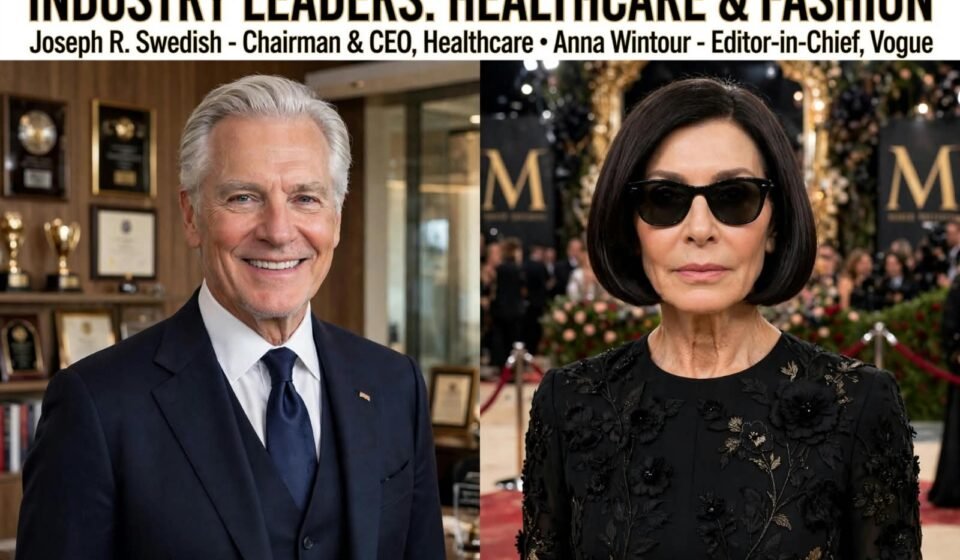
Joseph Swedish and Anna Wintour: Careers, Backgrounds, Achievements, and the Truth Behind Their Connection

Joseph Swedish and Anna Wintour are two prominent names associated with leadership, professional success, and influence in very different industries. Joseph Swedish is known for his work in healthcare administration and corporate leadership, while Anna Wintour has built an extraordinary reputation in fashion journalism, publishing, and international media. Although their names sometimes appear together in online searches, understanding their individual careers is essential to getting an accurate picture of who they are.
The topic Joseph Swedish and Anna Wintour raises several interesting questions. Who are these individuals? What made them successful? Do they share a personal or professional relationship? And why might people search for both names together? These questions deserve a clear answer based on publicly available information rather than speculation. Their professional journeys offer useful lessons about leadership, decision-making, ambition, and the different ways people can influence major industries.
This article explores Joseph Swedish and Anna Wintour, covering their backgrounds, careers, professional accomplishments, leadership approaches, public reputations, and the available evidence regarding any connection between them. It also explains why their names should be considered separately when discussing their achievements and personal histories.
Understanding the Search for Joseph Swedish and Anna Wintour
When people search for Joseph Swedish and Anna Wintour, they may expect to discover a shared biography, a family connection, or an interesting story involving two well-known professionals. However, the appearance of two names in the same search phrase does not necessarily mean that the individuals have a direct relationship. Search engines frequently group names because users are curious about them, because similar articles cover both subjects, or because a particular combination of terms has attracted attention online.
In this case, the most useful starting point is to distinguish their professional backgrounds. Joseph Swedish is associated primarily with healthcare management, health insurance, and corporate governance. Anna Wintour is associated with fashion publishing, editorial leadership, cultural influence, and the development of Vogue into one of the most recognizable fashion publications in the world. Their careers have followed different paths, with separate responsibilities and professional achievements.
The keyword Joseph Swedish and Anna Wintour can therefore be explored as a comparison of two influential leaders rather than as proof of a shared personal story. This distinction matters because responsible biography writing should separate confirmed information from assumptions. Readers deserve a factual explanation that respects both individuals and avoids presenting unverified relationships as established facts.
Who Is Joseph Swedish?
Joseph R. Swedish is an American healthcare executive best known for senior leadership positions in the healthcare industry. His career has included major responsibilities in hospital administration, healthcare systems, and health insurance. Over the years, he became recognized for managing complex organizations that serve large populations and operate within a highly regulated business environment.
Healthcare leadership requires a combination of financial knowledge, operational experience, communication skills, and an understanding of the needs of patients and medical professionals. Executives in this field must consider how organizations can remain financially sustainable while providing dependable services. Joseph Swedish built his professional reputation in this challenging environment, where decisions can affect employees, healthcare providers, insurance customers, and entire communities.
His career is particularly associated with Trinity Health and Anthem, Inc., now known as Elevance Health. These organizations operate in different parts of the healthcare system, giving Swedish experience across healthcare delivery and health benefits. His leadership history makes him an interesting subject for anyone researching executive management, healthcare administration, or corporate decision-making.
Although Joseph Swedish and Anna Wintour are sometimes discussed together online, Swedish’s established professional identity is rooted in healthcare rather than fashion journalism. Understanding that background helps readers appreciate his accomplishments without confusing them with the achievements of other prominent figures.
Joseph Swedish’s Early Career and Education
Joseph Swedish’s professional development reflects the importance of education, practical experience, and long-term commitment to healthcare administration. His educational background includes a bachelor’s degree from the University of North Carolina at Charlotte and a master’s degree in health administration from Duke University. This combination helped prepare him for leadership positions involving organizational management, financial planning, and healthcare operations. CDW+1
Healthcare administration is a demanding profession because it combines business responsibilities with the needs of patients and communities. Leaders must understand how hospitals function, how healthcare professionals coordinate their work, and how organizations can manage limited resources effectively. Swedish’s career developed within this environment, giving him experience with organizations of different sizes and structures.
Before reaching the highest levels of healthcare leadership, Swedish held executive positions in organizations such as Hospital Corporation of America and Centura Health. These experiences helped him develop an understanding of hospital operations and large-scale healthcare delivery. His subsequent appointment at Trinity Health represented another important stage in his career, bringing responsibilities across a substantial healthcare network.
The development of his career illustrates how executive leadership often grows through successive responsibilities rather than a single breakthrough moment. Experience in operations, financial management, and organizational planning can prepare professionals for more complicated assignments. Swedish’s background demonstrates the value of combining formal education with practical knowledge when leading institutions that serve the public.
Joseph Swedish’s Leadership at Trinity Health
Joseph Swedish became president and chief executive officer of Trinity Health in the middle of the two-thousands, taking responsibility for a large healthcare organization operating across multiple states. Trinity Health’s work involves coordinating healthcare services, supporting hospitals, and maintaining organizational systems that help patients receive care. Leading an organization of this scale requires an ability to balance clinical priorities with financial and operational demands. GlobeNewswire+1
During his time at Trinity Health, Swedish worked in an environment where healthcare organizations faced continuing pressure to improve efficiency while maintaining the quality of their services. Hospitals must manage staffing, equipment, technology, patient expectations, and operating expenses. Executive leaders help establish priorities and create the structures through which local teams can respond to these challenges.
One important feature of healthcare leadership is the need to consider the long-term sustainability of an institution. A hospital system cannot focus only on immediate financial results; it must also maintain the resources, workforce, and infrastructure required to deliver services in the future. This makes strategic planning essential, particularly when healthcare costs and community needs continue to change.
Swedish’s tenure at Trinity Health provided substantial experience in managing these interconnected responsibilities. It also strengthened his background in large-scale organizational leadership before he moved into the health insurance sector. For readers interested in the professional journey behind Joseph Swedish and Anna Wintour, this period offers an example of how specialized expertise can support advancement into senior leadership.
Joseph Swedish and His Role at Anthem
Another significant chapter in Joseph Swedish’s career began when he joined Anthem, Inc., a major American health benefits company, in twenty-thirteen. He became president and chief executive officer and later assumed the chairmanship of the company’s board. Anthem operates in the health insurance industry, where companies must navigate regulations, manage financial risks, negotiate with healthcare providers, and develop services for members. CDW+1
Leading a health benefits company presents challenges that differ from those encountered in hospital administration. Hospital leaders concentrate on healthcare delivery and clinical operations, while insurance executives must also consider coverage arrangements, claims administration, pricing, provider networks, and the needs of employers and individual members. Swedish’s move from Trinity Health to Anthem gave him experience across these connected parts of the healthcare system.
His leadership responsibilities included overseeing a large organization with a complicated operating structure. Major health benefits companies must respond to changes in government policy, medical costs, technology, and customer expectations. Their executives need to make decisions that consider both business performance and the consequences of healthcare coverage for members.
Swedish retired from Anthem’s executive leadership in twenty-seventeen and subsequently served as executive chairman during a transition period. He later continued as a senior adviser before completing that role. His time at Anthem remains a central part of his professional history because it placed him at the top of a major organization operating in an important and highly regulated industry. CDW+1
Joseph Swedish’s Work Beyond Executive Management
Retirement from a chief executive position does not necessarily mean the end of a professional career. Many experienced executives continue contributing through board appointments, advisory responsibilities, investment activities, and mentorship. Joseph Swedish’s work after Anthem reflects this broader form of corporate involvement.
His professional biography identifies an association with Concord Health Partners, an investment firm focused on healthcare-related businesses. Healthcare investment can involve supporting organizations that develop products, services, and technologies intended to improve how care is delivered. Such work requires evaluating opportunities, understanding commercial risks, and considering whether a business can create sustainable value. CDW+1
Board service also allows experienced leaders to contribute their knowledge without managing an organization’s everyday activities. Directors typically help oversee strategy, assess major risks, monitor executive performance, and support responsible governance. Their role is different from that of a chief executive, who is directly responsible for implementing the organization’s plans.
Swedish’s experience across hospitals, health benefits, and corporate governance provides a useful example of how leadership skills can transfer between related sectors. His career also illustrates how professional influence can continue after an individual leaves a highly visible executive position.
Who Is Anna Wintour?
Anna Wintour finally reveals truth behind her iconic glasses
Anna Wintour
Fashion journalism, publishing, and global editorial leadership
Anna Wintour is one of the most recognizable figures in international fashion media. Her work has influenced magazine publishing, designer visibility, celebrity culture, and major fashion events.
Anna Wintour is a British-born journalist and publishing executive whose name has become closely associated with Vogue. Over several decades, she developed a reputation for decisive editorial judgment, a distinctive personal style, and an influential position within the fashion industry. Her career demonstrates how a publication can shape conversations about clothing, identity, celebrity, design, and culture.
Wintour’s influence extends beyond selecting magazine covers or deciding which collections receive attention. Fashion publications connect designers with audiences, help establish emerging trends, and influence how people interpret style. Under her leadership, Vogue strengthened its place as a major platform for fashion photography, editorial storytelling, celebrity profiles, and cultural coverage.
She has also played an important role in large fashion-related events and philanthropic initiatives, particularly the Metropolitan Museum of Art’s Costume Institute benefit, commonly known as the Met Gala. The event brings together fashion designers, entertainers, business leaders, and other prominent figures to support the museum’s Costume Institute.
Although Joseph Swedish and Anna Wintour have very different professional backgrounds, their careers share one broad feature: both have held senior positions requiring strategic judgment and the ability to influence large organizations. Their achievements, however, must be understood within their respective industries.
Anna Wintour’s Early Life and Introduction to Journalism
Anna Wintour was born in London in nineteen forty-nine. She grew up in a family environment connected to journalism, as her father, Charles Wintour, worked as a newspaper editor. Exposure to publishing and media helped introduce her to the world of editorial decision-making, although her later success also depended on her own interests, experience, and professional choices.
Wintour developed an interest in fashion while young and entered the working world without following the conventional university route associated with many publishing careers. She pursued opportunities in fashion journalism and learned through practical experience. Her early professional journey included positions at publications where she gained familiarity with fashion reporting, editorial production, and the demands of magazine publishing.
Her career developed through work at British and American publications, including Harper’s Bazaar, New York, and British Vogue. These experiences exposed her to different editorial cultures and audiences. They also helped her understand how fashion magazines could maintain a recognizable identity while responding to changing tastes.
The early years of Wintour’s career demonstrate that professional success can emerge through a combination of opportunity, persistence, and a willingness to learn. Her rise was not simply a matter of having an interest in clothing. It involved developing an editorial point of view, understanding the commercial side of publishing, and learning how to work within competitive media organizations.
Anna Wintour’s Rise at American Vogue
Anna Wintour became editor-in-chief of American Vogue in nineteen eighty-eight. Her appointment marked a major turning point in her career and established the foundation for her long-lasting influence over the publication. She approached fashion journalism with a strong sense of visual identity and an interest in connecting high fashion with broader cultural and commercial themes.
Vogue had already established itself as an important fashion magazine, but Wintour helped shape a distinctive editorial direction for its modern era. Her approach emphasized striking photography, carefully selected cover subjects, contemporary fashion, and a relationship between luxury design and popular culture. The magazine’s pages brought together established designers, rising talent, models, actors, and public figures.
Editorial leadership involves much more than choosing attractive photographs. An editor must decide which stories deserve attention, which audiences a publication wants to reach, and how its identity should evolve. Wintour became known for making clear decisions about these matters and for expecting high standards from the teams around her.
Her work at Vogue also helped demonstrate the commercial importance of fashion journalism. Editorial content can influence public interest in designers, products, and cultural figures, while advertising and partnerships help support the business of publishing. Balancing those interests requires a strong understanding of both creative work and commercial realities.
Wintour’s long tenure at American Vogue made her one of the most influential editors in the history of fashion media. In twenty-twenty-five, she stepped away from the magazine’s day-to-day top editorial position while retaining broader leadership responsibilities at Condé Nast and Vogue. The Business of Fashion+1
Anna Wintour’s Current Position and Responsibilities
Anna Wintour’s career has continued to evolve as the publishing industry changes. According to Condé Nast’s published leadership information, she serves as chief content officer of the company and global editorial director of Vogue. These positions give her responsibilities extending beyond the daily production of a single magazine. Conde Nast+1
The distinction between global editorial leadership and running the daily operations of American Vogue is important. In twenty-twenty-five, Wintour announced that the American edition would appoint a new head of editorial content. Chloe Malle subsequently took on that position, while Wintour retained her broader responsibilities. This arrangement allows the publication’s daily editorial work to continue under dedicated leadership while Wintour contributes to its wider strategic direction. Vogue+1
The change also reflects a wider development in the media industry. Established publications increasingly operate across print, websites, video, social media, events, and international editions. A global editorial leader must consider how these different platforms support a shared identity while allowing individual markets to respond to their own audiences.
For Wintour, this stage of her career represents a shift in responsibilities rather than a complete departure from fashion publishing. Her influence remains connected to Vogue’s international identity and Condé Nast’s broader editorial portfolio. This makes her professional story relevant to discussions about succession planning, organizational change, and the evolution of established media brands.
Anna Wintour’s Influence on Fashion and Popular Culture
Anna Wintour’s influence extends well beyond the fashion pages of a magazine. Fashion journalism helps determine which designers receive attention, how new collections are interpreted, and which visual styles become prominent in public conversation. A leading publication can give emerging talent a valuable platform while helping established fashion houses reach audiences around the world.
Wintour’s editorial approach has often combined high-fashion photography with celebrities, musicians, actors, and other figures who attract public interest. This approach reflects the way fashion has become connected to entertainment and popular culture. Clothing is no longer discussed only as a practical or artistic subject; it is also associated with identity, status, creativity, and the public image of influential people.
Her influence has not been universally free from criticism. Powerful editorial positions naturally invite debate about representation, commercial priorities, creative freedom, and the people who receive opportunities. Fashion media has faced questions about diversity and access, and Wintour has publicly acknowledged shortcomings in the industry’s efforts to become more inclusive. TIME+1
These discussions illustrate the complicated nature of influence. An individual may contribute significantly to an industry’s development while also facing legitimate questions about its limitations. Understanding Anna Wintour means recognizing both her substantial professional achievements and the wider debates surrounding the institutions she has helped shape.
Anna Wintour and the Met Gala
The Met Gala is among the most recognizable annual events associated with Anna Wintour. Officially connected to the Metropolitan Museum of Art’s Costume Institute, the event combines fashion, celebrity appearances, exhibition themes, and fundraising. It has become an international spectacle that attracts considerable attention from media outlets and audiences interested in style and entertainment.
Wintour has played a central role in developing the event’s modern identity. Her involvement reflects an understanding that fashion can be presented as both an artistic discipline and a subject of public fascination. By bringing together designers, performers, models, and other prominent guests, the event creates a platform for creative expression while supporting the museum’s work.
The Met Gala also demonstrates how carefully managed events can strengthen a cultural institution’s visibility. A successful event brings attention to its underlying mission, encourages public interest, and creates opportunities for fundraising. The clothing worn by guests becomes part of a broader conversation about design, artistic interpretation, and cultural references.
For anyone studying Joseph Swedish and Anna Wintour as professional leaders, the Met Gala provides a useful contrast with healthcare management. Wintour’s work operates in a creative environment where image, storytelling, and cultural relevance are essential. Swedish’s career, by comparison, has involved institutions where patient services, financial sustainability, and healthcare operations are central concerns.
Joseph Swedish and Anna Wintour: Are They Related?
One of the main questions surrounding the keyword Joseph Swedish and Anna Wintour is whether the two individuals are related. Based on the publicly documented career histories available, there is no reliable evidence establishing that they are relatives, spouses, or members of the same family. Their professional biographies describe separate careers in different industries.
Joseph Swedish is known for senior executive roles in healthcare and health insurance. Anna Wintour is known for fashion journalism and global publishing leadership. Their documented professional histories do not establish a direct partnership or a significant shared business venture. Consequently, it would be misleading to describe them as a connected family or professional duo without credible evidence.
It is worth distinguishing the absence of documented evidence from an absolute claim about every possible interaction between two people. Public biographies cannot establish everything that may have happened privately. However, responsible writing should not turn that uncertainty into a story about a secret relationship, an undisclosed family connection, or a joint enterprise.
The most accurate conclusion is that Joseph Swedish and Anna Wintour are separately accomplished individuals whose names can be explored together as a comparison of professional leadership. Anyone searching for a specific connection should look for reliable documentation rather than relying on repeated claims from websites that provide no verifiable supporting evidence.
Why Do People Search for Joseph Swedish and Anna Wintour Together?
Search behavior can sometimes create unexpected combinations of names. A person researching influential executives might encounter Joseph Swedish, while someone exploring prominent media figures might discover Anna Wintour. If an article or search page discusses both names, other readers may become curious about whether they share a story.
Search engines also organize information around the words people enter, not necessarily around confirmed personal relationships. When two names appear in a single query, the results may include comparison articles, biographies, discussions, or pages designed to answer the combined search. The existence of these results does not independently confirm a relationship.
Another reason could be a general interest in successful leaders. Both individuals have held demanding senior positions, managed complex organizations, and developed reputations that extend beyond their immediate workplaces. Readers interested in leadership may find it useful to compare their career paths even though their industries have little in common.
The important point is to separate the reason for a search from the facts about the people being searched. The phrase Joseph Swedish and Anna Wintour can guide readers toward a useful comparison, but it should not be treated as evidence that the individuals share a personal history.
Comparing Joseph Swedish and Anna Wintour’s Professional Backgrounds
Joseph Swedish and Anna Wintour have built their careers around different kinds of organizations. Swedish’s experience centers on healthcare administration, insurance, corporate governance, and healthcare investment. Wintour’s professional identity centers on fashion publishing, editorial judgment, media strategy, and cultural events.
Their educational and professional paths also reflect the demands of their respective industries. Swedish earned qualifications in healthcare administration and advanced through executive roles in healthcare organizations. Wintour developed her expertise through practical experience in journalism and magazine publishing, eventually leading one of the world’s most recognizable fashion publications.
Despite these differences, both careers demonstrate the importance of understanding an organization’s wider environment. Healthcare executives must understand regulation, costs, service delivery, and the needs of patients and providers. Publishing leaders must understand audiences, creative talent, advertising, editorial standards, and changes in media consumption.
The comparison is useful because it shows that leadership is not a single formula. The knowledge required to lead a health benefits company is different from the knowledge required to direct a fashion magazine. Nevertheless, both roles require judgment, communication, strategic planning, and the ability to make difficult decisions.
Leadership Lessons From Joseph Swedish
Joseph Swedish’s career offers several lessons for people interested in executive management. One is the value of developing specialized knowledge before moving into broader leadership responsibilities. His background in healthcare administration gave him a foundation for understanding the organizations he later led.
Another lesson concerns the importance of learning across different parts of an industry. Swedish’s experience included hospital operations, integrated healthcare delivery, and health insurance. These areas have different objectives, but they also depend on one another. Understanding their relationships can help leaders make better-informed strategic decisions.
His career also highlights the value of long-term organizational thinking. Healthcare institutions face financial pressures, regulatory requirements, and changing expectations from the communities they serve. Leaders must balance immediate operational needs with investments that support future performance. This requires careful analysis rather than decisions based only on short-term results.
Finally, Swedish’s later involvement in corporate governance and healthcare investment illustrates how experience can remain valuable after a chief executive role ends. Leadership is not limited to managing everyday operations. It can also involve advising organizations, evaluating opportunities, and helping boards make informed decisions.
Leadership Lessons From Anna Wintour
Anna Wintour’s career offers a different set of lessons, particularly for people interested in publishing, fashion, communication, and creative management. One of the most important is the value of developing a clear editorial identity. A publication needs a recognizable perspective if it wants readers to understand what makes it distinctive.
Wintour’s work at Vogue demonstrates how consistent editorial choices can contribute to a brand’s public identity. Photography, cover subjects, writing, design, and cultural coverage all contribute to the way audiences perceive a magazine. These elements must work together rather than function as disconnected creative decisions.
Another lesson concerns the relationship between creativity and business. Fashion publishing depends on original ideas, but it also operates within commercial realities. A magazine must attract readers, maintain relationships with advertisers, support its staff, and adapt to changes in technology. Effective editorial leadership recognizes that creative ambition and commercial sustainability are closely connected.
Wintour’s evolving role also highlights the importance of succession planning. Established leaders must consider how an organization can remain strong when responsibilities change. Delegating day-to-day operations, developing new talent, and maintaining a clear strategic direction can help preserve an institution’s identity while allowing it to evolve.
The Different Industries Behind Their Success
The healthcare industry and the fashion publishing industry may appear to have little in common, but both depend on large networks of people, resources, and decisions. Joseph Swedish worked in an environment where healthcare delivery, insurance coverage, regulatory compliance, and financial management were major priorities. Anna Wintour developed her career in a world shaped by creative talent, editorial judgment, public attention, and the commercial demands of publishing.
Healthcare organizations must earn the trust of patients, healthcare professionals, employers, and regulators. Their success depends on reliable services, responsible financial decisions, and the ability to respond to changes in medical practice and public policy. Leaders in this field are expected to consider the practical consequences of their decisions for the people who rely on healthcare services.
Fashion publishing faces a different set of challenges. Editors must understand changing cultural interests, identify compelling stories, work with creative professionals, and maintain the publication’s relevance in a competitive media environment. Their decisions influence which ideas, designers, and personalities receive public attention, although that influence operates within a much broader industry.
The comparison between Joseph Swedish and Anna Wintour therefore demonstrates that professional influence takes many forms. One executive may shape an organization’s operations and strategy, while another influences cultural conversations and creative industries. Neither form of leadership should be judged solely by visibility; the responsibilities, goals, and outcomes of each role must also be considered.
Public Reputation and Professional Recognition
Public reputation develops through a combination of professional achievements, media coverage, organizational responsibilities, and public perception. Joseph Swedish became known through his leadership of major healthcare organizations, particularly Trinity Health and Anthem. His reputation is connected primarily to executive management and experience in the healthcare sector.
Anna Wintour’s public reputation developed through decades of work in fashion journalism. Her recognizable appearance and association with Vogue made her a familiar figure even to people who do not regularly read fashion magazines. Her involvement in high-profile fashion events has also helped make her name part of wider conversations about celebrity, style, and popular culture.
The two reputations operate differently because the audiences for their work are different. Healthcare executives are often discussed in relation to business performance, organizational changes, and the structure of healthcare services. Fashion editors are more likely to attract attention through magazine covers, designer relationships, celebrity appearances, and cultural influence.
In both cases, however, professional reputation should be distinguished from unsupported personal claims. A person’s public profile does not mean that every story associated with their name is accurate. Readers researching Joseph Swedish and Anna Wintour should look for information that can be connected to reliable biographies, official organizational records, or credible reporting.
What Their Careers Reveal About Professional Ambition
Professional ambition is often described as the desire to achieve a senior position, earn recognition, or become influential in a chosen field. The careers of Joseph Swedish and Anna Wintour suggest a broader understanding. Advancement also involves developing expertise, learning how organizations function, and becoming capable of handling responsibilities that grow more complex over time.
Swedish’s experience demonstrates how leadership in a specialized industry can develop through a succession of executive roles. Experience with healthcare delivery provided a foundation for his work at Trinity Health, while his later leadership at Anthem expanded his responsibilities into the health benefits sector. Each stage brought a different set of organizational challenges.
Wintour’s journey demonstrates the importance of editorial experience, a recognizable creative perspective, and the ability to guide a publication through changes in audience expectations. Her career required more than a knowledge of fashion. It also involved understanding how stories are presented, how publications establish identities, and how creative decisions interact with commercial priorities.
Neither career provides a universal formula for success. Professional opportunities differ, and the skills required in one industry may not transfer directly to another. Nevertheless, both histories illustrate the value of preparation, practical experience, decisive judgment, and an ability to adapt as responsibilities change.
Why Accurate Biographical Information Matters
Biographical writing can help readers understand how successful people developed their careers and what their experiences reveal about leadership. However, its value depends on accuracy. When writers combine two names in a headline, they should explain the relationship between the subjects rather than encouraging readers to assume a connection that has not been established.
The keyword Joseph Swedish and Anna Wintour presents a good example of this issue. Both individuals have recognizable professional identities, but their documented careers belong to different sectors. Without reliable evidence, it would be inappropriate to describe them as relatives, romantic partners, or business collaborators.
Accuracy also matters when discussing personal details. Public figures may have family lives, friendships, and private interests that are not fully documented. Writers should not invent personal stories to make a biography more engaging. If information is unavailable or uncertain, it is better to acknowledge that limitation than to fill the gap with speculation.
Readers can evaluate a biographical claim by considering where it originated, whether reputable sources support it, and whether the information is presented consistently across reliable records. Official corporate biographies are particularly useful for professional appointments, while established publications can provide context about public careers and cultural influence.
The Importance of Distinguishing Facts From Online Speculation
The internet makes information easier to access, but it also allows unverified claims to circulate rapidly. A statement can appear on multiple websites without having been independently confirmed. Repetition may make a claim seem established even when the underlying evidence is weak or nonexistent.
This problem is especially common with searches involving public figures. Readers may encounter headlines suggesting an unexpected relationship, a secret partnership, or a personal connection between people who work in unrelated fields. Sometimes such headlines reflect genuine reporting; in other cases, they rely on assumptions created by the search phrase itself.
A careful examination of Joseph Swedish and Anna Wintour should begin with their known professional histories. Swedish’s healthcare leadership and Wintour’s publishing career are supported by organizational biographies and established professional records. Those records do not establish a direct personal or business relationship between them.
That conclusion does not make the topic uninteresting. Their separate careers offer a meaningful opportunity to explore how leadership works in different industries. The most useful article is one that answers readers’ questions while maintaining a clear distinction between documented achievements and unconfirmed claims.
Career Achievements and Long-Term Influence
Long-term professional influence is not always easy to measure. Some leaders influence the structure and management of organizations, while others help shape cultural preferences and public conversations. Their impact may develop over decades, and it can continue even after they leave a particular position.
Joseph Swedish’s career involved leading major healthcare organizations and participating in corporate governance. His experience across healthcare delivery and insurance provides an example of how executive leadership can operate across interconnected institutions. His subsequent advisory and investment activities also demonstrate how experienced professionals can continue contributing to an industry in different capacities.
Anna Wintour’s influence is closely associated with the development of modern fashion publishing. Her work helped define the editorial identity of American Vogue and strengthened her position within Condé Nast’s global media structure. Her involvement in major fashion events also illustrates how publishing leadership can extend into cultural institutions and philanthropy.
Their achievements should be evaluated within their own contexts. Swedish’s professional legacy concerns healthcare administration and corporate leadership, while Wintour’s concerns fashion journalism, editorial direction, and media influence. Comparing their careers is most useful when it highlights these differences instead of treating them as evidence of a shared personal history.
Frequently Asked Questions About Joseph Swedish and Anna Wintour
Who is Joseph Swedish?
Joseph R. Swedish is an American healthcare executive known for serving as president and chief executive officer of Trinity Health and later as president, chief executive officer, and chairman of Anthem, a major health benefits company. His career has included healthcare administration, corporate leadership, and healthcare-related investment.
Who is Anna Wintour?
Anna Wintour is a British-born journalist and publishing executive known for her longstanding association with Vogue. She served as editor-in-chief of American Vogue for decades and later shifted away from its day-to-day editorial leadership. She remains associated with Condé Nast as chief content officer and global editorial director of Vogue.
Are Joseph Swedish and Anna Wintour related?
There is no reliable public evidence establishing that Joseph Swedish and Anna Wintour are related. Their documented professional backgrounds are in separate industries, and available biographical information does not establish a family relationship between them.
Do Joseph Swedish and Anna Wintour work in the same industry?
No. Joseph Swedish’s career centers on healthcare administration, health insurance, and corporate governance. Anna Wintour’s career centers on fashion journalism, magazine publishing, and media leadership. Their professional responsibilities and areas of expertise are substantially different.
Why does the keyword Joseph Swedish and Anna Wintour appear together?
The names may be searched together because readers are curious about a possible connection or because online articles discuss their careers in the same context. However, a combined search phrase does not establish that the individuals have a personal or professional relationship.
What is Joseph Swedish best known for?
Joseph Swedish is best known for senior executive leadership at Trinity Health and Anthem. His career reflects experience managing complex healthcare organizations and navigating the operational and financial challenges of the healthcare industry.
What is Anna Wintour best known for?
Anna Wintour is best known for her influence on Vogue and international fashion publishing. Her work has shaped editorial coverage, designer visibility, fashion photography, and the relationship between fashion and popular culture.
What can readers learn from comparing their careers?
Readers can learn that successful leadership depends on understanding an organization’s goals, developing relevant expertise, and making decisions suited to a particular industry. Their careers also demonstrate that professional influence can take different forms, from managing large institutions to shaping creative and cultural conversations.
Conclusion: Joseph Swedish and Anna Wintour Have Distinct Professional Stories
Joseph Swedish and Anna Wintour have built influential careers in very different fields. Swedish’s professional journey is rooted in healthcare administration, executive management, and corporate governance. Wintour’s career is defined by fashion journalism, editorial leadership, and her longstanding influence on the international publishing industry.
Although their names appear together in the keyword Joseph Swedish and Anna Wintour, the available public information does not establish a direct personal or professional connection between them. Their combined search phrase should therefore be understood as an opportunity to explore two separate careers rather than as evidence of an undisclosed relationship.
Both individuals demonstrate how professional influence can develop through experience, strategic thinking, and leadership. Swedish’s career highlights the complexities of managing healthcare institutions, while Wintour’s illustrates the power of editorial direction and cultural communication. Their achievements are most accurately understood by examining the responsibilities and challenges of their respective industries.
For readers seeking reliable information, the essential lesson is simple: a compelling biography should be informative without relying on speculation. By focusing on documented careers, established achievements, and clearly stated limitations, it is possible to understand Joseph Swedish and Anna Wintour as two accomplished individuals with distinct professional identities.
Stay in touch to get more updates & news on Magazine Dispatch!